
Few things match the frustration of watching a prized houseplant or outdoor tree slowly decline while you guess the cause. Is it powdery mildew? Root rot? A nitrogen deficiency? Overwatering?
In the past, diagnosing a struggling plant meant hours spent scrolling through internet forums, comparing blurry photos, or making a trip to a local nursery. Today, artificial intelligence (AI) can analyze a leaf photo in seconds and tell you exactly what’s wrong—and how to fix it.
Here is a breakdown of how AI plant identification and disease diagnosis actually work, how accurate the technology is, and how you can use tools like the TreeMax App to keep your garden thriving.
How AI Plant Identification & Diagnosis Works
At its core, AI diagnosis relies on Computer Vision (CV) and Convolutional Neural Networks (CNNs)—a class of deep learning algorithms specifically designed for analyzing visual imagery.

When you scan a plant with a smart application, the AI follows a precise process:
Image Preprocessing & Feature Extraction
The AI immediately cleans up the photo by adjusting contrast, cropping noise, and isolating the primary subject—the leaf, stem, or trunk. It breaks the visual down into microscopic visual features:
- Color variations: Chlorosis (yellowing), necrosis (browning/blackening), or unusual spotting.
- Texture patterns: Powdery blights, fungal rusts, or webbed spider mite damage.
- Structural shapes: Leaf curling, wilting, or unnatural galls.
Pattern Matching via Deep Neural Networks
The algorithm compares those extracted features against a massive dataset containing millions of labeled botanical images. By matching shape, venation pattern, and color distribution, the model first identifies the plant species.
Pathological Analysis & Probability Scoring
Once the species is identified, the AI shifts to disease classification. It cross-references visible damage against known symptoms for that specific species. Instead of making an absolute guess, it calculates a probability score across several potential causes (e.g., 94% Powdery Mildew, 4% Downy Mildew, 2% Sunburn).
What AI Can—and Cannot—Diagnose
AI has made massive strides, but understanding its strengths and limitations helps you get the best results.
| What AI Diagnoses Extremely Well | Where AI Needs Your Help |
| Fungal Infections: Leaf spot, rust, powdery mildew, black rot. | Underground Root Rot: Root systems hidden beneath soil require moisture checks. |
| Pest Infestations: Visible scale insects, mealybugs, aphids, spider mites. | Environmental Stress: Drafts, low humidity, or temperature shocks with non-specific yellowing. |
| Nutrient Deficiencies: Distinct chlorosis patterns (e.g., iron vs. magnesium deficiency). | Early-Stage Infections: Microscopic symptoms before physical lesions appear. |
04 Tips for Getting an Accurate AI Diagnosis
If you want the highest accuracy when using an AI scanner, follow these capturing best practices:
- Focus on the Symptom: Take a crisp, close-up shot of the affected area (e.g., the specific leaf spot or pest cluster) rather than the entire room.
- Use Natural, Bright Light: Avoid harsh shadows or strong colored grow lights, as they distort the color algorithms that detect nutrient deficiencies.
- Include Healthy & Unhealthy Tissue: If possible, capture a frame that shows where healthy green tissue meets the brown/yellow diseased area.
- Scan Multiple Angles: Take one photo of the top of the leaf and another of the underside, where pests like spider mites and aphids love to hide.
Simplify Plant Health with the TreeMax App
Diagnosing a disease is only half the battle—knowing how to treat it without damaging your plant is what counts.
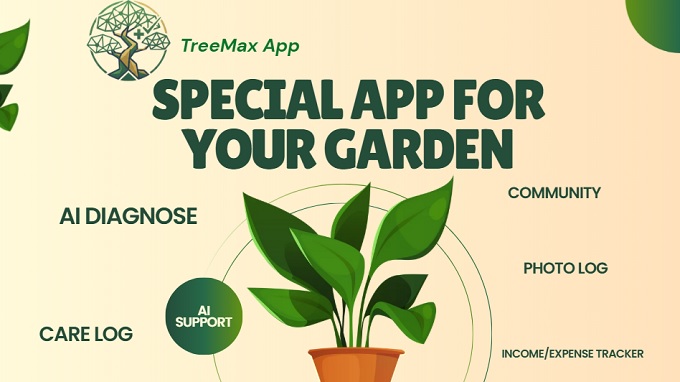
That’s where the TreeMax App (treemax.app) comes in. TreeMax combines instant AI plant identification and diagnostic scanning with personalized care management:
- Instant Identification & Diagnosis: Snap a photo to identify trees and indoor plants instantly while detecting early signs of disease.
- Actionable Care Plans: Rather than just giving you a disease name, TreeMax provides step-by-step treatment protocols tailored to your plant type.
- Automated Reminders: Once your plant is on the mend, set automated schedules for watering, fertilizing, and pruning so it never relapses.
By turning complex botanical science into quick, mobile-friendly care instructions, AI tools make expert-level plant care accessible to everyone—from beginner balcony gardeners to experienced tree enthusiasts.
>> Also read:
- Tree Care for Busy Professionals: How to use automation to keep your plants alive while you’re at work
- The “Yellow Leaf” Diagnostic Guide: 10 reasons your leaves are turning yellow
TreeMax App
