
We’ve known that certain indoor plants do a remarkable job of absorbing harmful gases through their leaves and root systems. TreeMax will give you top 5 trees thay actually improve indoor air quality.
When we think about air pollution, we usually picture exhaust fumes, smog, and factories. But the truth is, the air inside our homes, offices, and apartments can often be more polluted than the air outside. Synthetic carpets, modern furniture, household cleaners, and plastic electronics all off-gas invisible toxins known as VOCs (Volatile Organic Compounds)—including formaldehyde, benzene, and trichloroethylene.
While heavy-duty mechanical HEPA filters are fantastic, nature has spent millions of years perfecting its own filtration systems. Ever since NASA’s famous Clean Air Study, we’ve known that certain indoor plants do a remarkable job of absorbing harmful gases through their leaves and root systems.
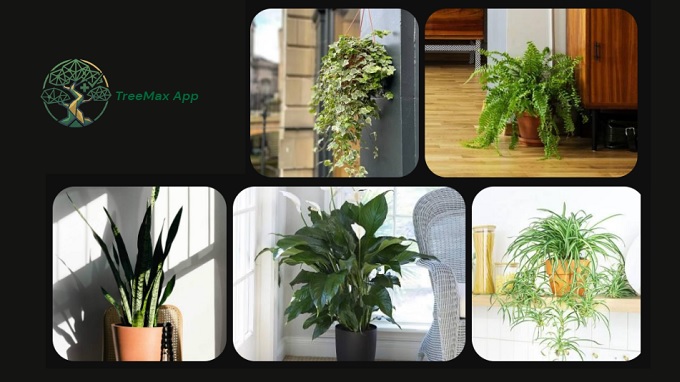
- If you want to breathe easier, add these five hard-working, air-purifying plants to your living space.
- Snake Plant (Sansevieria). Source: Bloomscape / Snake Plants: Allergy-Reducing and Air-Purifying | Bloomscape
- Peace Lily (Spathiphyllum). Source: Growhub / Peace Lilies And Indoor Air Quality: How They Clean Your Home’s Air
- Spider Plant (Chlorophytum comosum). Source: Succulents Box / Spider Plant – Air-purifying, Easy Houseplants for Low Light Rooms …
- English Ivy (Hedera helix). Source: grow urban. / How to care for English Ivy Indoors – grow urban.
- Boston Fern (Nephrolepis excelsa). Source: Seventh Generation / 20 Plants To Help Purify the Air in Your Home | Seventh Generation

The Top 5 Air-Purifying Houseplants
The Snake Plant (Sansevieria trifasciata)
Often called “Mother-in-Law’s Tongue,” this plant is nearly indestructible, making it perfect for beginners.
- The Air Benefits: It is one of the top filters for formaldehyde, which is commonly found in cleaning products, toilet paper, and personal care items.
- The Nighttime Superpower: Unlike most plants that release carbon dioxide at night, the Snake Plant continues to convert carbon dioxide into oxygen under the cover of darkness. This makes it an ideal addition to your bedroom.
The Peace Lily (Spathiphyllum)
If you want an air purifier that also brings beautiful, serene white blooms into your home, the Peace Lily is an excellent choice.
- The Air Benefits: It scored as one of NASA’s top performers because it removes a massive cocktail of toxins: benzene, formaldehyde, trichloroethylene, toluene, and xylene.
- Care Note: Peace lilies love high humidity and moist soil, but keep them out of reach of curious cats and dogs, as their leaves are toxic to pets.
The Spider Plant (Chlorophytum comosum)
With its fun, exploding-star shape and trailing “baby” plantlets, the Spider Plant looks beautiful on shelves or in hanging baskets.
- The Air Benefits: It is highly efficient at combating carbon monoxide and xylene (a solvent used in printing and leather industries).
- The Safe Choice: Unlike the Peace Lily, Spider Plants are completely non-toxic to pets, making them a worry-free choice for animal lovers.
English Ivy (Hedera helix)
English Ivy is an elegant, climbing vine that looks stunning when draped over a mantle piece or cascading down a bookcase.
- The Air Benefits: Beyond filtering out standard airborne VOCs like benzene, studies have shown that English Ivy is incredibly effective at reducing airborne mold particles and fecal matter particles.
- Best For: Bathrooms or rooms prone to dampness where mold spores tend to travel through the air.
Boston Fern (Nephrolepis exaltata)
With its soft, feathery, bright-green fronds, the Boston Fern acts like a giant, natural air scrubber for your living room.
- The Air Benefits: It ranks as one of the single best houseplants for removing formaldehyde from indoor environments.
- The Added Bonus: Because they require frequent misting or high humidity to thrive, Boston ferns act as natural humidifiers, pumping moisture back into dry, air-conditioned rooms.
Maximize Your Plant Filtration Power
Simply putting one tiny plant in a massive room won’t instantly clean all your air. To truly build a bio-filtration system in your home, keep these simple guidelines in mind:
| Strategy | Actionable Step |
| The Surface Area Rule | Plant leaves do the filtering. Wipe dust off your plants regularly so their pores (stomata) stay clear to absorb maximum airborne toxins. |
| Quantity Matters | For noticeable air quality improvements, aim for one medium-sized houseplant for every 100 square feet of indoor space. |
| The Soil Connection | Microorganisms in the plant’s soil actually do a large percentage of the toxic cleanup. Ensure your potting soil is high-quality and well-aerated. |
Pro Tip: Healthy plants filter air efficiently; sick or dying plants do not. If your air-purifying plants start displaying yellowing leaves or odd powdery patches, utilize the TreeMax app to immediately diagnose the root cause via a quick photo scan. Catching the issue early keeps your green filtration team operating at peak performance.
>> Also read:
- Top Gardening App 2026: Why TreeMax’s Garden Finance Feature is a Game Changer
- Best App for Plant ID and Garden Maintenance: Why TreeMax Stands Out
TreeMax App
