
There is a massive difference between a room with a few small houseplants on a windowsill and a room anchored by a towering, vibrant indoor tree. Large indoor trees act as living architecture. They draw the eye upward, soften hard corners, fill empty spaces with lush textures, and instantly give any room a calm, tropical, high-end designer feel.
However, many plant lovers hesitate to make the leap from small potted succulents to full-scale indoor trees. The investment is higher, and the fear of watching a beautiful, costly tree drop its leaves can be intimidating.
Fortunately, choosing the right species and using the right care strategy makes growing a spectacular indoor canopy entirely manageable. If you are ready to maximize your home’s greenery, here are the four best indoor trees to transform your space, along with the secrets to keeping them thriving.

Fiddle Leaf Fig (Ficus lyrata) — The Statement Maker
If you have flipped through an interior design magazine or scrolled through home decor social media lately, you have seen the Fiddle Leaf Fig. It is famous for its dramatic, oversized, violin-shaped leaves that grow on structural, elegant stems.
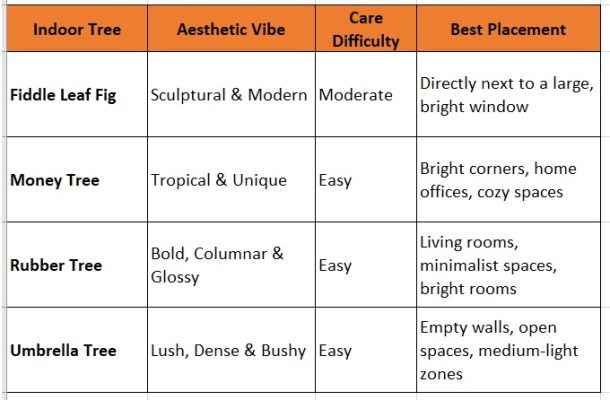
The Visual Impact: Bold, sculptural, and instantly modern. It creates a stunning focal point in living rooms and bright entryways.
Light Requirement: High. It needs plenty of bright, filtered, indirect sunlight to maintain its vibrant green color.
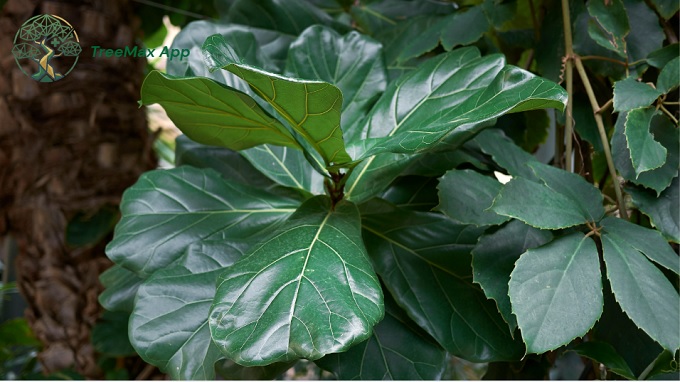
The Care Secret: Fiddle Leaf Figs hate being moved. Find a permanent spot near an east- or west-facing window and stick to it. Water only when the top two inches of soil are completely dry—overwatering is their number one enemy.
Money Tree (Pachira aquatica) — The Adaptable Beauty
For those who want a unique, tropical look without the fussy care requirements, the Money Tree is an absolute standout. It typically features a beautifully braided wooden trunk topped by a crown of bright green, hand-shaped leaves that sprout out like miniature umbrellas.
The Visual Impact: Whimsical, lush, and distinctly compact. It fits perfectly into corners, next to desks, or on low side tables.
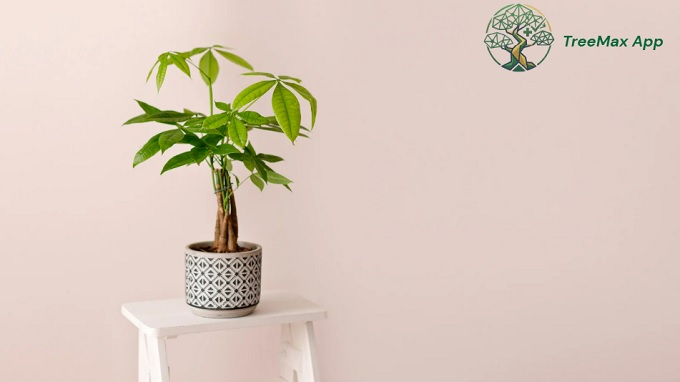
Light Requirement: Medium to bright indirect light. It is highly adaptable and can tolerate slight shade better than most indoor trees.
The Care Secret: Money Trees store a significant amount of moisture in their thick, braided trunks. This makes them incredibly forgiving if you occasionally forget to water them.
Rubber Tree (Ficus elastica) — The Glossy Powerhouse
If your style leans clean, moody, or minimalist, the Rubber Tree is your perfect match. It features thick, leathery, oversized oval leaves that boast an incredible glossy sheen. It grows in a striking upright, column-like fashion.
The Visual Impact: Clean lines, rich textures, and bold presence. While the standard variety is deep forest green, you can also find the “Burgundy” variety for a dramatic dark pop, or variegated types with cream-and-pink borders.
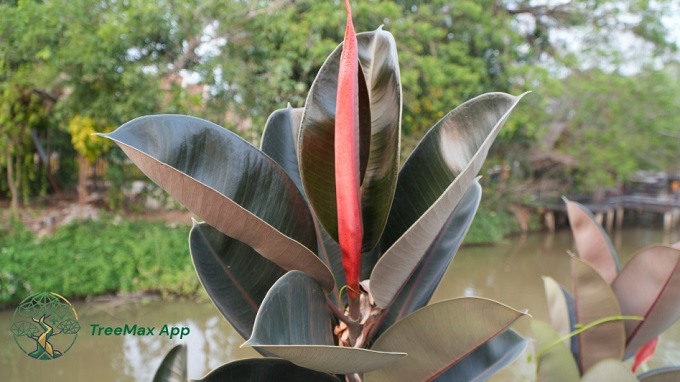
Light Requirement: Bright, indirect light. While it can survive in lower light, its colors will fade, and it may become leggy.
The Care Secret: Because the leaves are so large and glossy, they act like dust magnets. Wipe the leaves down with a damp microfiber cloth every few weeks to keep the pores clear so the tree can breathe and photosynthesize efficiently.
Dwarf Umbrella Tree (Schefflera arboricola) — The Jungle Canopy
If your goal is a wild, dense, deeply rich indoor jungle vibe, look no further than the Umbrella Tree. Its glossy green leaflets grow in distinct circular clusters that cascade downward, creating a full, bushy canopy that looks naturally abundant.
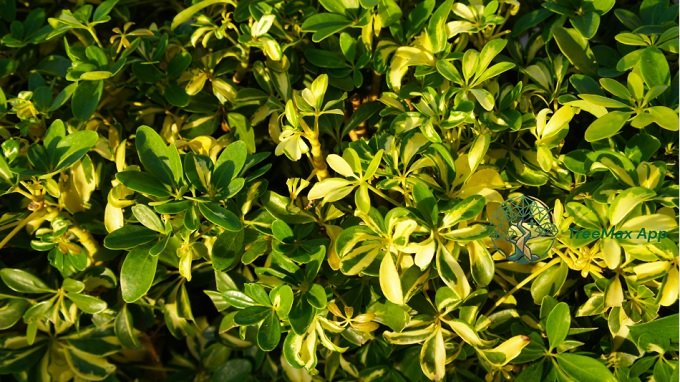
The Visual Impact: Rich, wild, and incredibly full. It is excellent for filling large empty walls or creating natural privacy screens near windows.
Light Requirement: Medium to bright indirect light. It is a robust grower that handles indoor conditions beautifully.
The Care Secret: Umbrella Trees respond incredibly well to pruning. If it starts getting too tall or sparse, pinching off the top growing tips will encourage the tree to branch out, creating a much bushier, denser look.
Quick Comparison: Finding Your Perfect Match
How to Protect Your Indoor Tree Investment with TreeMax
Bringing a large tree into your home is an investment in both your environment and your wallet. The biggest mistake indoor gardeners make is assuming a tree will thrive on a generic, rigid calendar schedule. In reality, a tree’s water and nutrient needs change constantly based on your local humidity, the season, and your home’s microclimate.
To eliminate the guesswork and ensure your new tree thrives from day one, smart plant parents rely on the TreeMax app.
TreeMax acts as a personal digital botanist right in your pocket:
- Location-Aware Care Schedules: TreeMax syncs with your local weather data and tracks indoor environmental factors. Instead of giving you generic advice, it builds a customized watering and care routine tailored to your exact location and the specific tree species.
- Instant AI Health Checks: Is your new Fiddle Leaf Fig dropping a leaf? Are your Rubber Tree leaves turning yellow? Instead of panicking or spending hours guessing on search engines, you can take a quick photo within TreeMax. The app’s advanced AI health monitor instantly analyzes the visual symptoms, gives you an accurate diagnosis, and maps out a step-by-step recovery plan before the issue spreads.
- Smart Reminders: From seasonal fertilizer tracking to reminders for dusting large leaves or rotating your tree for even growth, TreeMax automates the mental load of plant parenting.
A thriving indoor tree completely changes the energy of a home. Choose the tree that matches your personal style, download TreeMax to handle the tracking, and watch your indoor sanctuary grow.
>> Also read:
- The Future of Gardening: How AI is replacing traditional plant encyclopedias
- Plant Care Routines Vary By Location: How TreeMax Tracks It For You
TreeMax App
