
As daylight hours lengthen and temperatures rise, indoor houseplants and bonsai trees awaken from winter dormancy. Spring marks the start of active growth, making it the most important season to replenish essential soil nutrients.
Applying the right fertilizer ratio at the right time ensures lush foliage, strong root networks, and healthy shoot development without risking nutrient burn.
Understanding N-P-K Ratios
All commercial fertilizers display three prominent numbers representing the primary macro-nutrients: N (Nitrogen), P (Phosphorus), and K (Potassium).
- Nitrogen (N): Promotes leafy growth and rich green pigmentation. Essential for tropical foliage plants in early spring.
- Phosphorus (P): Stimulates root expansion, flowering, and fruit development.
- Potassium (K): Enhances overall cellular strength, water regulation, and disease resistance.

| Plant Category | Recommended N-P-K Ratio | Ideal Frequency | Best Fertilizer Type |
| Tropical Houseplants (Monstera, Pothos, Ficus) | 3-1-2 or 10-10-10 (Balanced) | Every 2–4 weeks | Liquid balanced fertilizer diluted to half-strength |
| Indoor Bonsai (Ficus, Chinese Elm) | 10-6-6 (High Nitrogen early spring) | Every 2 weeks | Organic cakes/pellets or liquid seaweed blend |
| Succulents & Cacti | 1-2-2 or 2-7-7 (Low Nitrogen) | Once every 4–6 weeks | Diluted low-nitrogen liquid plant food |
When to Start Fertilizing in Spring
Timing is crucial. Applying heavy fertilizer to a dormant plant can damage tender root tips.
- Watch for Active Signs of Growth: Look for fresh light-green leaf buds, unfurling fronds, or new stem growth before your first feeding.
- Moisten Soil First: Never apply liquid fertilizer to bone-dry soil. Always water your plant lightly first to prevent fertilizer salts from burning dry roots.
- Start Diluted: Begin the season with a half-strength dilution rate for the first 1–2 feedings, then gradually transition to full spring strength as growth accelerates.
Step-by-Step Spring Feeding Routine
1. Inspect for New Buds and Shoots:
Confirm active growth before feeding.
Examine node tips and branch ends. Ensure the plant has broken dormancy and is actively producing new green tissues.
2. Water Soil Lightly First:
Prevent root shock.
Irrigate the potting substrate with plain water so roots are hydrated. This protects delicate root hairs from direct contact with concentrated salts.
3. Mix Liquid Fertilizer to Half-Strength:
Follow proper dilution.
Dilute your liquid fertilizer with room-temperature water. For early spring feedings, use 50% of the manufacturer’s recommended dose.
4. Apply Fertilizer Solution:
Ensure even coverage.
Pour the mixture evenly around the soil surface until a small amount drains from the bottom drainage holes. Discard any excess runoff.
Common Spring Fertilization Mistakes
- Over-Fertilizing: Excessive fertilizer causes nitrogen burn, resulting in browned leaf margins, crispy tips, and white salt buildup on soil surfaces.
- Feeding Sick or Stressed Plants: Fertilizer is a nutrient supplement, not a cure for root rot or pest infestations. Resolve health issues before feeding.
- Feeding Immediately After Repotting: Fresh potting soil usually contains built-in nutrients. Wait 4 to 6 weeks after repotting before applying extra fertilizer.
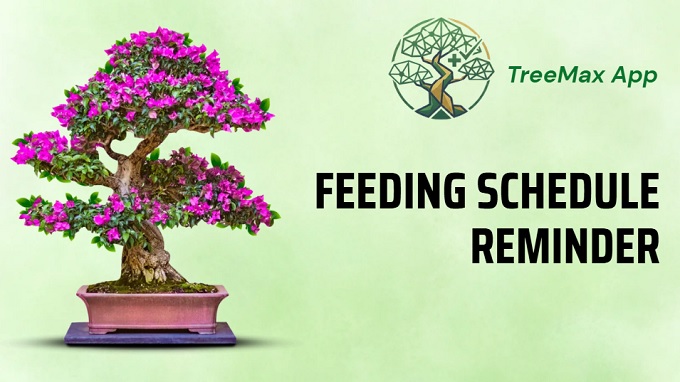
Automate Your Feeding Schedule with TreeMax
Managing individual feeding schedules, dilution strengths, and fertilizer types across dozens of houseplants and bonsai can quickly become confusing.
TreeMax streamlines your seasonal plant care with smart features:
- Automated Care Reminders: Get customized alerts for watering and fertilizing tailored to specific plant species and seasonal light shifts.
- Automated Inventory Tracking: Keep track of your fertilizers, soil mixes, and pest treatments so you know when supplies are running low.
- AI Plant Doctor: Snap photos of yellowing or burned leaves to diagnose potential nutrient deficiencies or fertilizer burn instantly.
- Visual Growth Timelines: Log photo entries throughout spring to compare leaf production and track fertilization progress.
>> Also read:
- Ficus Bonsai Care 101: Pruning, Watering, and Indoor Placement
- How to Keep Track of Your Indoor Garden Collection & Supplies
TreeMax App
